
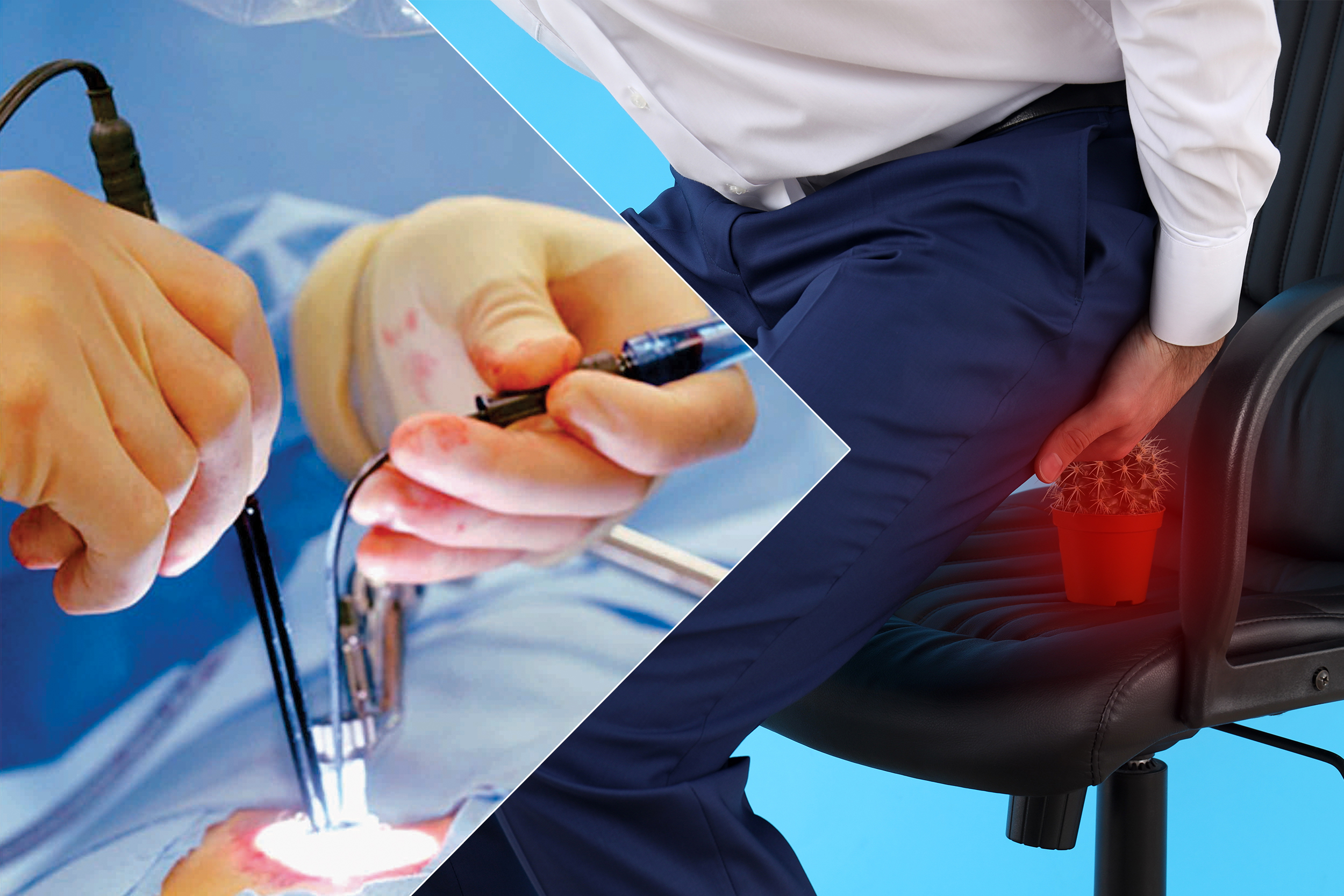
No cuts, no stitches
Laser energy is delivered through a slim fibre. There is no blade and no external wound — nothing to stitch or remove later.
Piles, fissure and fistula all affect the anal region — but they are very different problems with very different treatments. Here's a quick way to tell them apart.
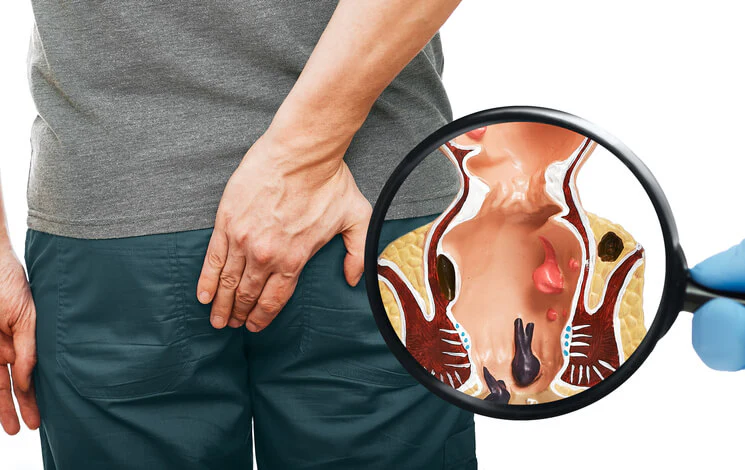
Swollen, enlarged blood vessels inside the anal canal or under the skin around the anus.
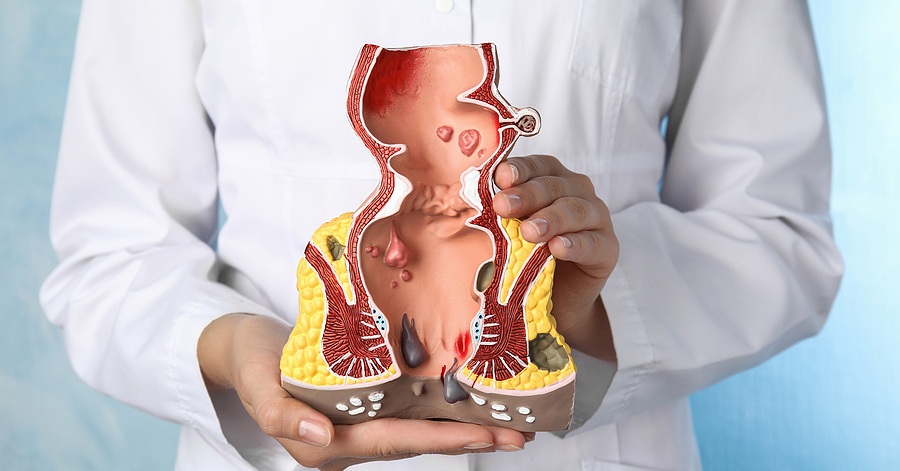
A small tear or cut in the skin lining the anal canal, usually caused by passing a hard stool.
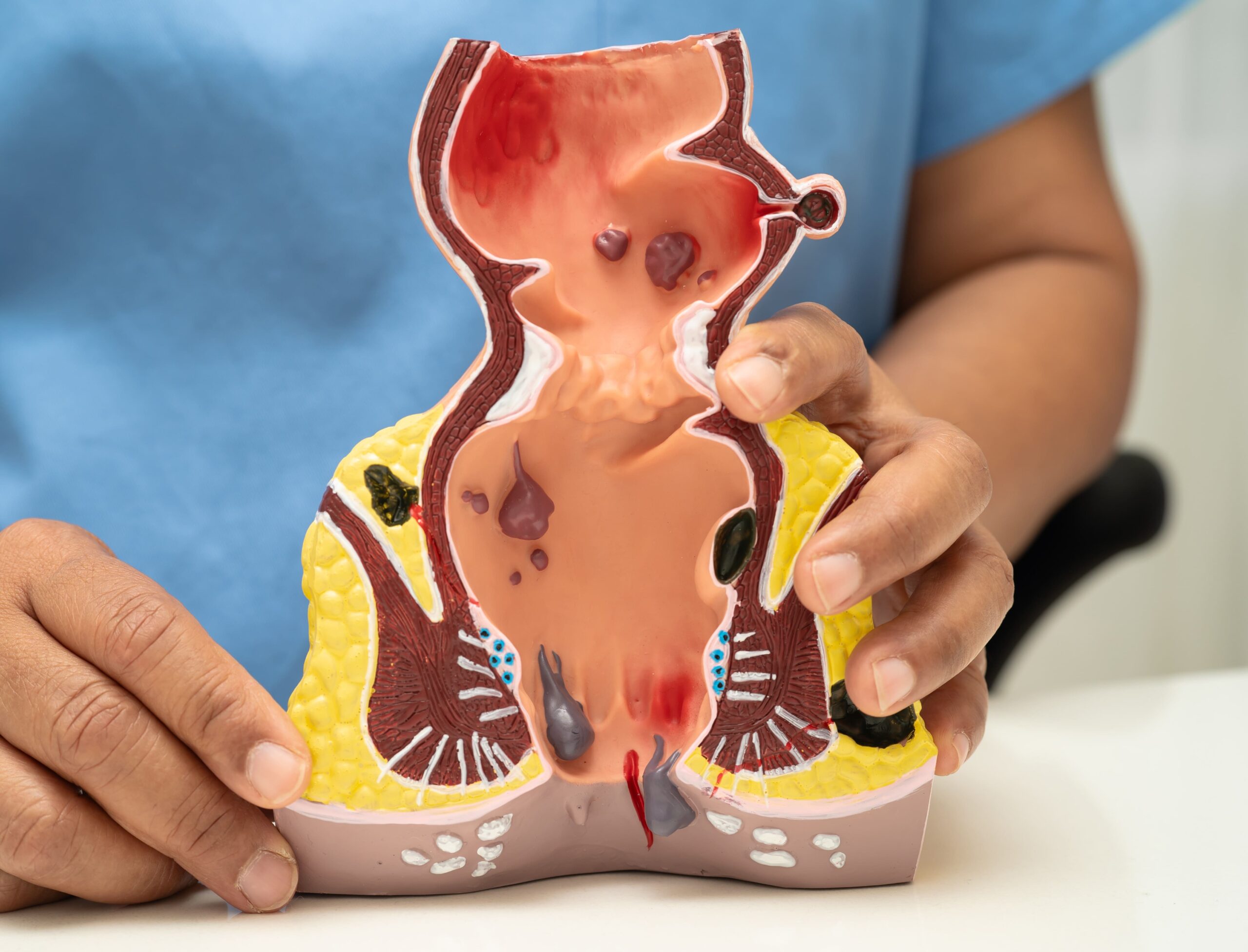
An abnormal tunnel between the inside of the anal canal and the skin around the anus, usually after an abscess.
If two or more have been bothering you for over two weeks, don't wait. These conditions rarely heal on their own and usually worsen over time.
Laser treatment for piles, fissure and fistula is an evidence-backed alternative to the conventional "cut & stitch" approach. Here's what actually changes for you as a patient.
Laser energy is delivered through a slim fibre. There is no blade and no external wound — nothing to stitch or remove later.
The laser seals small blood vessels as it works, so there is very little bleeding during or after the procedure.
Walk in in the morning, walk out the same evening. Most patients return to a desk job in 2–3 days.
Especially critical for fissure & fistula — the laser spares the anal sphincter muscle. Continence is never at risk.
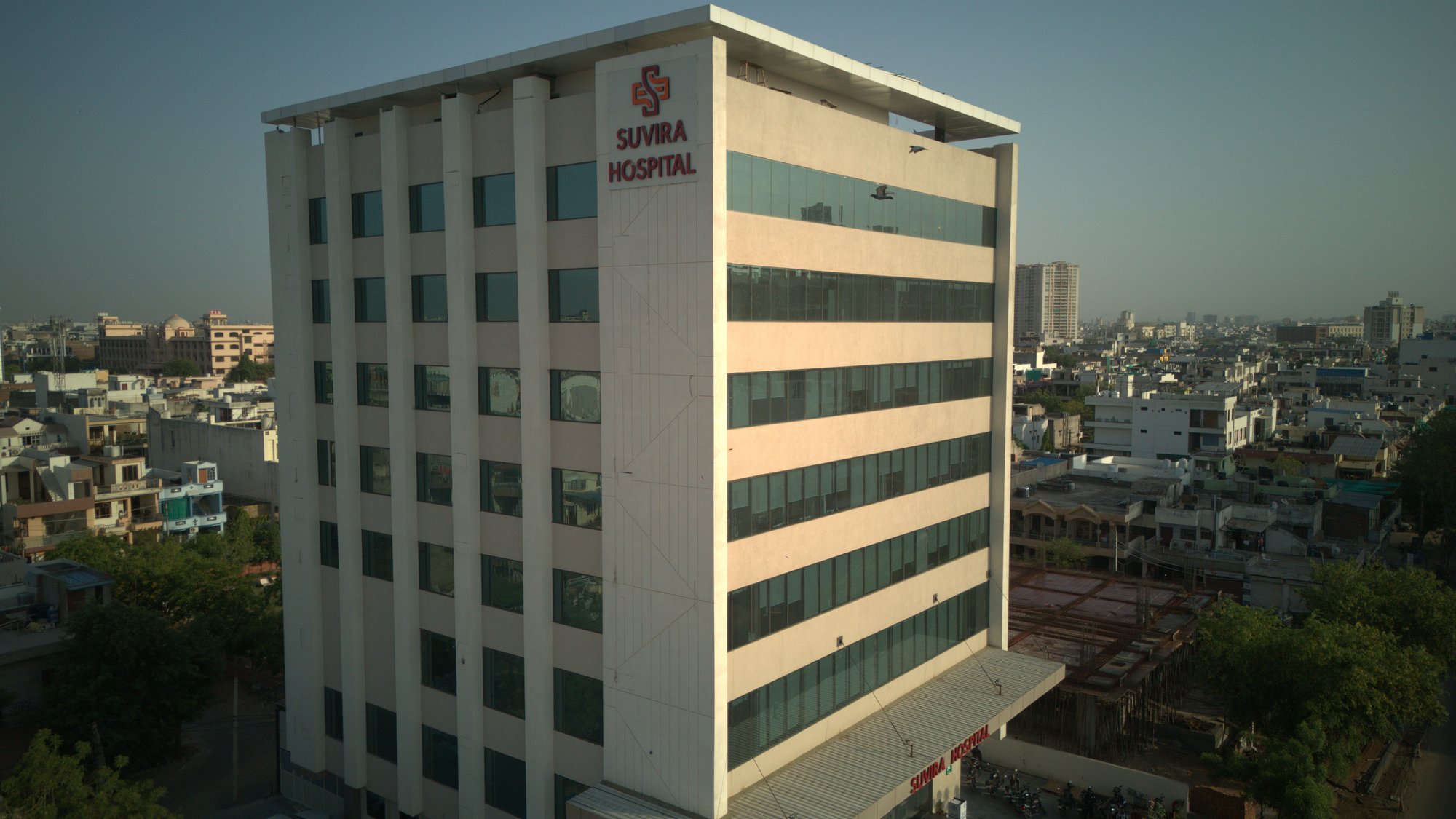
Suvira is a 150-bedded NABH-class multispeciality hospital in Mansarovar, Jaipur. Our philosophy — Har Ek Jaan Anmol — shapes every patient touchpoint.
Piles, fissure and fistula each need a different laser technique. Here's what Dr. Vipin Jain will recommend — and what to expect.
A slim laser fibre is gently placed into the swollen pile tissue, and precise laser energy shrinks the enlarged blood vessels from within. No external cuts, and the surrounding skin and sphincter muscle are completely untouched.
Acute fissures (under 6 weeks) often heal with medicine, warm sitz baths and a high-fibre diet. But a chronic fissure — one that hasn't healed in 6–8 weeks — needs a procedure. Laser gently relaxes the spastic sphincter muscle and cleans the fissure edges so tissue can finally close.
Anal fistula has traditionally been the hardest of the three to cure. FILAC uses a fibre passed along the fistula tract, delivering laser energy radially that seals it shut from inside. The sphincter muscle is fully preserved, and there are no cuts on the outside.
Open and stapler surgery are still widely used — but most patients who have a choice now prefer laser. Here's what changes.
Laser is not appropriate for every patient — very advanced piles with a large external component, or complex multi-branch fistulas, may need a combined approach. Dr. Vipin Jain will recommend the honest best option for your specific case.
Laser surgery for piles, fissure or fistula is a day-care procedure at Suvira. Here's a simple walk-through of what happens.
Walk in on an empty stomach. Admissions desk completes paperwork and insurance pre-authorisation while you are shown to your room.
Dr. Vipin Jain reviews your examination and imaging, explains the procedure once more, and answers any last questions. Light pre-op prep.
Short spinal or local anaesthesia. The procedure itself takes 20–45 minutes depending on the condition. You stay awake but feel nothing.
A few hours of observation in your room. Light meal, first oral painkiller if needed, walking trial and instructions for home.
You walk out the same evening with a simple medication kit, diet & lifestyle plan, and direct WhatsApp access to the team.
Dr. Vipin Jain is one of Jaipur's most experienced laparoscopic & laser surgeons — trusted by patients and peers alike.
A senior laparoscopic and laser surgeon in Rajasthan with 24+ years of practice and over 2,200 laparoscopic & laser procedures. Dr. Jain has a special interest in difficult and recurrent laser surgery for piles, fissure and fistula, as well as laser procedures for varicose veins and pilonidal sinus. Previously attached to Max Hospital, Delhi · Fortis Hospital, Jaipur · Birla Hospital, Jaipur.
Detailed stories from recent patients — names changed for privacy, with permission to publish.
I had bleeding piles for almost two years and kept postponing because I was scared of surgery. I finally consulted Dr. Vipin Jain after a particularly bad episode. He explained everything calmly, no pressure. The laser procedure itself took 30 minutes under spinal anaesthesia — I didn't feel a thing. Home the same evening, back at my desk in three days. Wish I had done this earlier.
After childbirth I developed a fissure that just wouldn't heal. Six months of creams, sitz baths, laxatives — nothing worked, and pain before every bowel movement was dread-inducing. Dr. Jain did a laser sphincterotomy as day-care. The very next morning, the pain was 80% gone. Two weeks later, fully healed.
I had open fistula surgery three years ago elsewhere — it came back in eight months. My local doctor suggested a bigger open procedure — I was terrified of losing continence. Dr. Jain ordered an MRI fistulogram, planned a FILAC. No cuts, sphincter preserved, home same day. Six months on and I'm fine.
Still have a question? Call us on +91 14148 64100 for a private consultation.
The procedure itself is painless because it's done under short spinal or local anaesthesia. Most patients experience mild discomfort for 1–3 days afterwards, easily controlled with oral painkillers. Compared to open or stapler surgery, the difference in post-op pain is dramatic.
Laser piles (LHP) 25–35 min, laser fissure 15–25 min, laser fistula (FILAC) 40–60 min. Including check-in, pre-op, recovery and discharge, plan for about 6–8 hours at the hospital.
No. General anaesthesia is rarely needed. Short spinal or local anaesthesia with mild sedation is enough. You stay awake and comfortable, with much faster recovery.
Same-day discharge for almost all patients — back at a desk job in 2–3 days for piles and fissure, 4–7 days for fistula. Full physical activity and gym in 2 weeks.
Yes. Suvira Hospital is empanelled with all major insurers (Star, HDFC ERGO, ICICI, Bajaj Allianz, Niva Bupa, Care, Tata AIG and more) plus CGHS, ESI and corporate panels. We handle pre-authorisation and final settlement — zero paperwork for you.
Honestly, no. Very advanced piles with a huge external tag, or complex multi-branch fistulas, may need a combined approach. Dr. Jain will tell you clearly if your case is a perfect laser fit, a combined case, or occasionally better suited to a different procedure.
Published laser recurrence rates: piles 5–10%, fissure under 5%, fistula 15–30% depending on complexity. Meaningfully better than traditional surgery. The single biggest factor in preventing recurrence long term is a high-fibre diet and avoiding straining.
Yes. Consultations are in a private OPD room with Dr. Jain, not in an open space. Billing, discharge summaries and insurance paperwork use neutral medical terminology.
Visit, call, WhatsApp or request a callback — however you prefer.
 Read all on Google