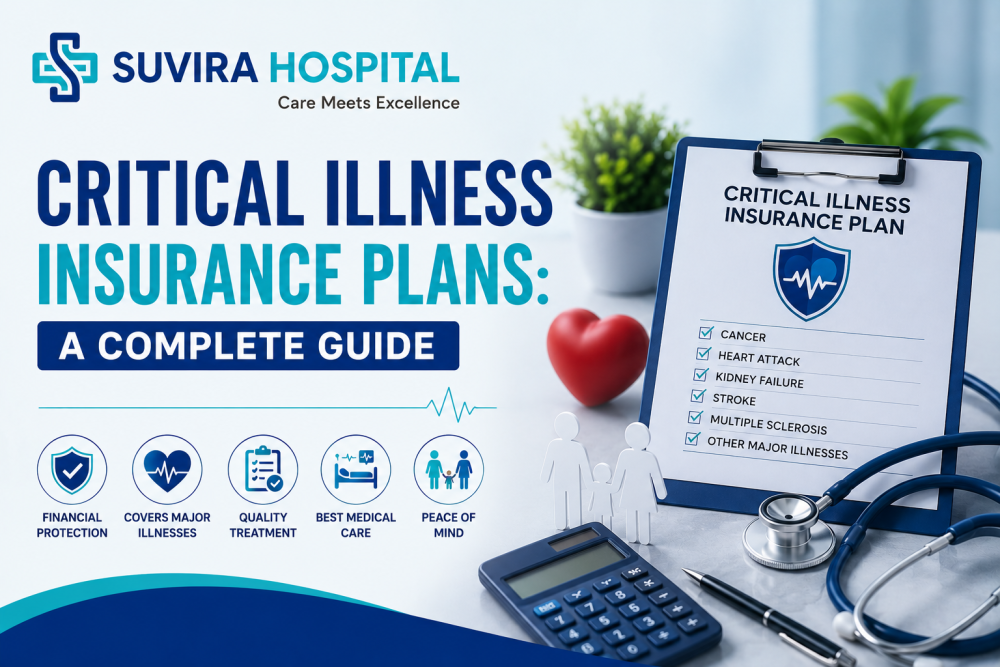
Life is full of uncertainties, and health challenges can come without warning. While basic health insurance protects against hospitalization and routine treatments, it often falls short when it comes to critical illnesses like cancer, heart attack, stroke, kidney failure, or organ transplants. These serious medical conditions not only involve high treatment costs but can also lead to loss of income due to long recovery periods. This is where critical illness insurance plays a vital role.
Critical illness insurance provides a lump sum payout upon diagnosis of a covered illness, ensuring financial stability during one of the toughest phases of life. Unlike regular health coverage, this special insurance plan is designed to meet massive treatment costs, ongoing medical expenses, and daily living costs during recovery.
In this comprehensive article, we will cover everything you need to know about critical illness insurance: its features, benefits, limitations, best practices, industry trends, and how it fits into your personal financial planning.
What Is Critical Illness Insurance?
Critical illness insurance is a specialized form of health insurance that pays a predetermined lump sum amount when the insured is diagnosed with a serious illness listed in the policy. Conditions such as cancer, heart disease, paralysis, organ failure, and major surgeries are common inclusions.
Unlike traditional health insurance, which pays hospital bills and medical expenses, this type of insurance provides money directly to the policyholder. The payout can be used for:
Importance of Critical Illness Insurance
The growing demand for critical illness insurance is driven by several factors:
Key Features of Critical Illness Insurance Plans
Critical illness insurance has unique features that make it distinct from other insurance options:
Types of Critical Illness Insurance
Critical illness insurance is offered in various formats to suit different needs:
Standalone Critical Illness Insurance
This is a separate insurance policy solely covering major illnesses. It offers substantial payouts and wide coverage.
Rider/Add-on to Health Insurance
Critical illness coverage can be added to an existing health insurance policy for extra protection. This option is often cheaper.
Rider/Add-on to Life Insurance
Life insurance policies can include critical illness riders, ensuring payout even during lifetime if diagnosed with a serious disease.
Group Critical Illness Insurance
Employers sometimes offer group critical illness coverage as part of employee benefits, but coverage is usually limited.
Illnesses Covered by Critical Illness Insurance
While the number of illnesses covered varies by insurance provider, some commonly included conditions are:
Benefits of Critical Illness Insurance
Critical illness insurance brings holistic advantages to both financial planning and health security:
Exclusions in Critical Illness Insurance
Critical illness insurance, like all insurance products, has certain exclusions:
Challenges in the Critical Illness Insurance Market
The adoption of critical illness insurance faces challenges, such as:
How to Choose the Right Critical Illness Insurance
Selecting the right insurance plan requires careful thought:
Role of Insurance in Financial Planning
Insurance, especially critical illness insurance, plays a crucial role in overall financial planning:
Technological Innovations in Critical Illness Insurance
Digital disruption has transformed the insurance industry, making critical illness coverage more user-friendly:
Future of Critical Illness Insurance Plans
The future of this insurance segment looks promising. Trends include:
Case Scenarios: Impact of Critical Illness Insurance
Example 1 – Cancer Treatment
A person diagnosed with cancer may face expenses of several lakhs for chemotherapy and surgery. With critical illness insurance, they receive lump sum funds to cover treatment without draining savings.
Example 2 – Stroke Recovery
After a stroke, treatment, rehabilitation, and long-term care might prevent the insured from working for months. Insurance payout covers essential expenses, loans, and therapy.
Example 3 – Organ Transplant
Transplants involve massive costs along with travel and post-surgery care. Only strong insurance coverage can provide the necessary funds.
Tips for Maximizing Critical Illness Insurance Benefits
Difference Between Health Insurance and Critical Illness Insurance
Both types of insurance complement each other rather than replace one another.
Conclusion
Critical illness insurance has emerged as a critical tool for financial security in today’s health landscape. It fills the gaps left by traditional insurance policies by offering lump sum payouts that can be used flexibly for any need—be it treatment, household expenses, or debt payments.
With rising medical costs, lifestyle-related health risks, and unpredictable healthcare needs, investing in critical illness insurance is a wise decision. It ensures you and your family have sustained financial support, peace of mind, and holistic protection.
In the end, insurance is not just about covering expenses—it is about preparing for life’s toughest challenges while securing your loved ones’ future.
Critical illness insurance provides a lump sum payout upon diagnosis of a covered illness, ensuring financial stability during one of the toughest phases of life. Unlike regular health coverage, this special insurance plan is designed to meet massive treatment costs, ongoing medical expenses, and daily living costs during recovery.
In this comprehensive article, we will cover everything you need to know about critical illness insurance: its features, benefits, limitations, best practices, industry trends, and how it fits into your personal financial planning.
Critical illness insurance is a specialized form of health insurance that pays a predetermined lump sum amount when the insured is diagnosed with a serious illness listed in the policy. Conditions such as cancer, heart disease, paralysis, organ failure, and major surgeries are common inclusions.
Unlike traditional health insurance, which pays hospital bills and medical expenses, this type of insurance provides money directly to the policyholder. The payout can be used for:
- Medical treatment and hospitalization costs
- Post-treatment rehabilitation and therapies
- Household expenses during recovery
- Loan repayments and education fees of dependents
- Hiring caregivers or support services
The growing demand for critical illness insurance is driven by several factors:
- Rising medical inflation – The cost of treatments such as chemotherapy, organ transplant, and cardiac surgeries is extremely high. Insurance helps manage these unavoidable costs.
- Increasing lifestyle-based diseases – Sedentary lifestyles, stress, unhealthy diets, and pollution have made people prone to critical illnesses. Insurance is necessary for financial preparedness.
- Long recovery period – Unlike minor illnesses, critical diseases often require prolonged rest, which means loss of income. Insurance ensures stability even when earnings are disrupted.
- Limited coverage under basic health insurance – Standard insurance policies may not cover the entire cost of critical illness treatments or post-care needs.
- Peace of mind – Insurance provides psychological assurance that financial aid will be available when needed.
Critical illness insurance has unique features that make it distinct from other insurance options:
- Lump sum payment on diagnosis of covered illness.
- Wide range of illnesses covered, sometimes more than 30 conditions.
- Survival period clause, typically requiring the insured to survive 30 days after diagnosis to claim insurance benefits.
- Affordable premiums compared to the sum assured because coverage is specific.
- Fixed benefit structure irrespective of actual medical bill amounts.
- Flexibility of funds – payout money can be used for any purpose, not just medical bills.
- Tax benefits on premiums under prevailing tax laws.
- Riders available to add critical illness coverage to existing insurance.
Critical illness insurance is offered in various formats to suit different needs:
Standalone Critical Illness Insurance
This is a separate insurance policy solely covering major illnesses. It offers substantial payouts and wide coverage.
Rider/Add-on to Health Insurance
Critical illness coverage can be added to an existing health insurance policy for extra protection. This option is often cheaper.
Rider/Add-on to Life Insurance
Life insurance policies can include critical illness riders, ensuring payout even during lifetime if diagnosed with a serious disease.
Group Critical Illness Insurance
Employers sometimes offer group critical illness coverage as part of employee benefits, but coverage is usually limited.
While the number of illnesses covered varies by insurance provider, some commonly included conditions are:
- Cancer of specified severity
- Heart attack (first occurrence)
- Stroke resulting in permanent symptoms
- Kidney failure requiring dialysis
- Major organ transplant (liver, lung, pancreas, kidney, heart)
- Bypass surgery (coronary artery)
- Multiple sclerosis
- Paralysis of limbs
- Permanent loss of vision or hearing
- Alzheimer’s and Parkinson’s disease (in advanced stage)
Critical illness insurance brings holistic advantages to both financial planning and health security:
- Financial protection – Large payouts cover astronomical healthcare expenses.
- Income support – Insurance ensures household expenses, rents, EMIs, and bills are manageable during treatment.
- Treatment flexibility – Insurance payout allows choice of advanced treatments, even abroad.
- Debt protection – Prevents families from selling assets or borrowing to pay medical costs.
- Complete freedom of use – Unlike health insurance, funds can be used for lifestyle, recovery, or household needs.
- Tax advantage – Premiums offer tax-saving benefits.
- Mental relief – Insurance reduces anxiety about the financial impact of illness.
Critical illness insurance, like all insurance products, has certain exclusions:
- Pre-existing diseases diagnosed before buying insurance
- Illnesses contracted within initial waiting period of 90 days
- Conditions not listed in the policy schedule
- Death within the survival period (usually 30 days post-diagnosis)
- Minor or early-stage illnesses
- Self-inflicted injuries or substance abuse-related conditions
The adoption of critical illness insurance faces challenges, such as:
- Awareness gap: Many people confuse it with normal health insurance.
- High premium for older applicants: Insurance premiums increase with age.
- Limited policy coverage: Not all illnesses or early stages are covered.
- Complicated claim process: Misunderstanding terms can lead to disputes.
- Dependency on employer’s group insurance: People fail to buy personal coverage outside work.
Selecting the right insurance plan requires careful thought:
- Check illnesses covered – More extensive coverage is better.
- Compare sum assured – Ensure coverage is high enough to meet actual costs.
- Look at survival period clause – Shorter survival periods are beneficial.
- Read exclusions and limitations in the insurance document carefully.
- Premium affordability – Strike a balance between coverage and budget.
- Insurer’s claim settlement ratio – Indicator of reliability of the company.
- Network support and reputation – Choose insurers with strong customer service.
Insurance, especially critical illness insurance, plays a crucial role in overall financial planning:
- Complements life and health insurance by covering high-risk events.
- Protects long-term savings and investments from being depleted.
- Ensures uninterrupted financial stability for family members.
- Complements retirement planning, especially in old age when risks increase.
- Helps in wealth preservation by avoiding emergency asset liquidation.
Digital disruption has transformed the insurance industry, making critical illness coverage more user-friendly:
- AI and automation in claim processing reduce delays.
- Wearables integrated with insurance apps offer discounts for healthy lifestyles.
- Telemedicine coverage enables consultations remotely.
- Online comparison portals make finding the right insurance easier.
- Blockchain in insurance contracts improves transparency and claim authentication.
The future of this insurance segment looks promising. Trends include:
- More customized insurance solutions tailored to individuals.
- Expanding global coverage to support medical tourism.
- Inclusion of mental health conditions in insurance policies.
- Lower premiums due to AI-driven risk prediction.
- Integration with preventive healthcare apps to reward healthy living.
Example 1 – Cancer Treatment
A person diagnosed with cancer may face expenses of several lakhs for chemotherapy and surgery. With critical illness insurance, they receive lump sum funds to cover treatment without draining savings.
Example 2 – Stroke Recovery
After a stroke, treatment, rehabilitation, and long-term care might prevent the insured from working for months. Insurance payout covers essential expenses, loans, and therapy.
Example 3 – Organ Transplant
Transplants involve massive costs along with travel and post-surgery care. Only strong insurance coverage can provide the necessary funds.
- Buy insurance early to enjoy lower premiums.
- Combine basic health insurance with critical illness riders.
- Opt for higher sum assured to account for inflation.
- Disclose complete medical history to avoid claim rejection.
- Review your insurance coverage every 3–5 years.
- Consider taking global coverage if traveling regularly.
- Educate family about claim process in case the insured is incapacitated.
| Aspect | Health Insurance | Critical Illness Insurance |
|---|---|---|
| Coverage | Hospitalization, surgery, pre/post hospital bills | Lump sum on diagnosis of listed illness |
| Benefit Payment | Actual medical bills reimbursed or cashless | Fixed sum regardless of actual expenses |
| Illness Scope | Covers standard treatments | Only critical illnesses (limited list) |
| Usage of Funds | Strictly medical | Free usage, medical or non-medical |
| Premiums | Based on wide coverage | Generally lower, based on selected diseases |
Critical illness insurance has emerged as a critical tool for financial security in today’s health landscape. It fills the gaps left by traditional insurance policies by offering lump sum payouts that can be used flexibly for any need—be it treatment, household expenses, or debt payments.
With rising medical costs, lifestyle-related health risks, and unpredictable healthcare needs, investing in critical illness insurance is a wise decision. It ensures you and your family have sustained financial support, peace of mind, and holistic protection.
In the end, insurance is not just about covering expenses—it is about preparing for life’s toughest challenges while securing your loved ones’ future.